
On this page
Ethiopia's 70-plus endemic mammal and bird species are a result of altitude and isolation: this highland island has been separated from the rest of Africa for so long that its own cast of characters evolved. For wildlife lovers, it ranks with destinations with far louder reputations.
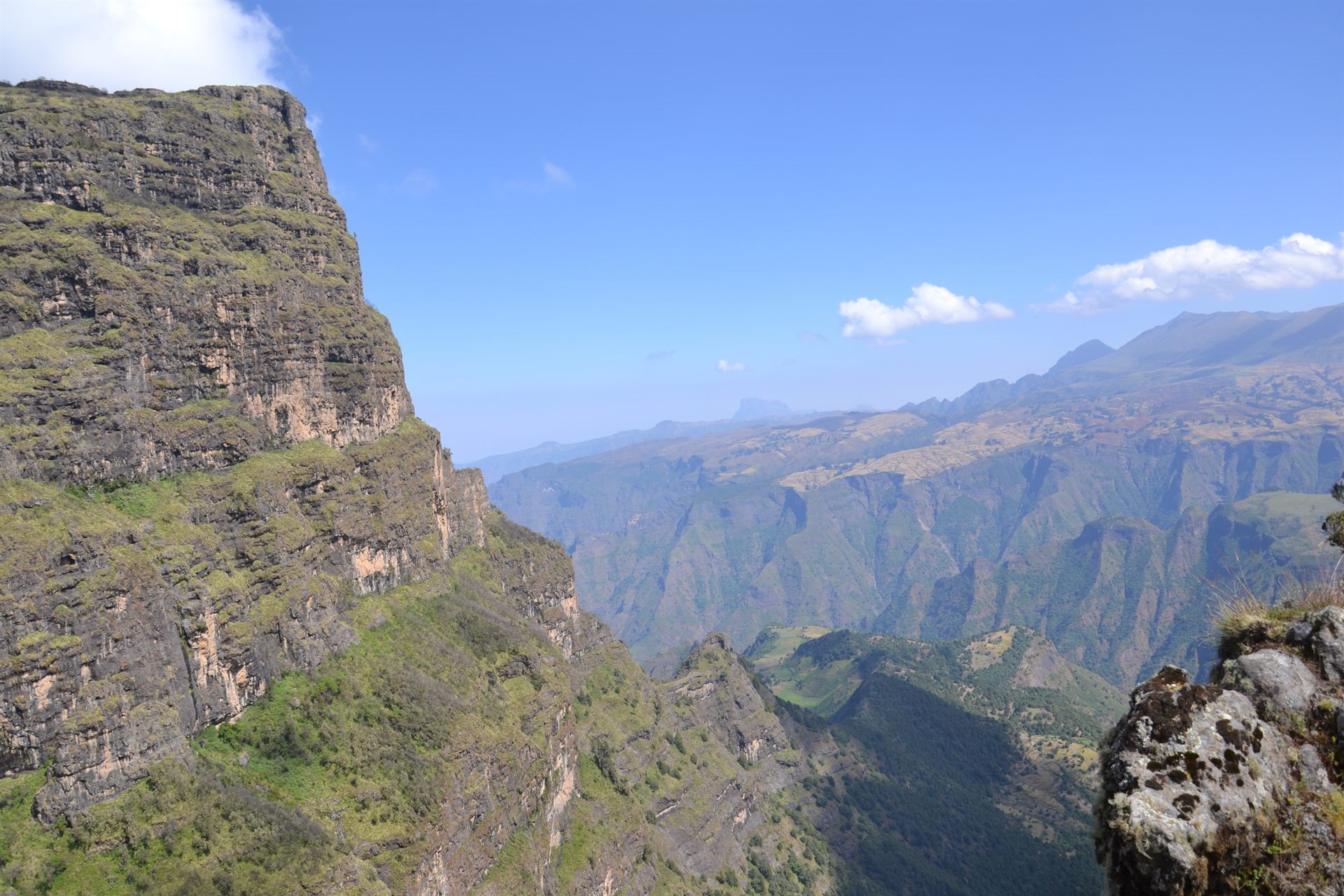
The Simien Mountains: a wildlife stage
No place concentrates the show like Simien. Gelada baboons — the world's only grass-eating primate — graze the meadows in troops of hundreds, their 'bleeding-heart' chests and elaborate social chatter a constant soundtrack. Even rarer is the walia ibex, a wild goat found only on these precipices; climbers and cliff-lovers, they're the park's ultimate prize.
Above it all, lammergeier vultures and augur buzzards ride the thermals at eye level. A good pair of binoculars pays for itself on day one.
Into the southern highlands
The Bale Mountains highlands hold their own set of stars: the giant mole-rat, found nowhere else, the Bale monkey, and the rare Ethiopian wolf — Africa's most endangered carnivore — hunting rodents on the Sanetti Plateau. It's a wild, open landscape that rewards patience and a quiet approach.
Lakes, forests and the Rift
Rift Valley lakes attract extraordinary birdlife, from pelicans to fish eagles, while pocket forests in the south shelter endemics like the black-winged lovebird. Around Harar, the famous hyena men still call generations of spotted hyenas to the city wall at night — an unforgettable add-on to any eastern itinerary.
Because these species spread across three distinct regions, the best wildlife trip is a route, not a single park. We'll design yours around the animals at the top of your list.
Written by
Melese
A local guide with Outstanding Simien Mountains Tours — every word in this journal comes from routes we lead for real.
 Share this article
Packed with detail?
Our advice is built from real routes we run every season. Tell us which places in this article caught your eye and we'll shape a tour around them.
Plan your trip around this guide